





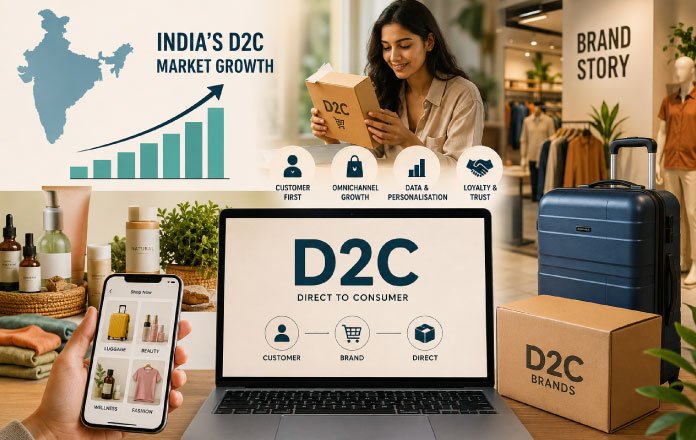
Direct-to-consumer, or D2C, brands have changed the way Indians shop. From luggage and beauty products to wellness, fashion and personal care, several young companies have built businesses by selling directly to consumers through their own websites, marketplaces and social platforms.
But the D2C story is changing.
The first phase was largely about getting online customers. The next phase is about building a sustainable business around those customers. Brands are now looking at repeat purchases, stronger customer relationships, physical stores, better distribution and improved profitability.
The opportunity remains large. India’s D2C market was estimated at around $12 billion in 2022, while some brands have managed to cross Rs 100 crore in revenue within just three to five years of starting operations.
The Website Is No Longer the Whole D2C Story
When the D2C model gained popularity, the formula looked simple. A company identified a consumer problem, created a product, launched a website and used digital advertising to reach potential buyers.
That approach helped many startups get off the ground.
However, competition has increased. Customer acquisition has become more expensive, and brands can no longer depend entirely on paid digital marketing. Marketplaces such as Amazon and Flipkart continue to be important sales channels, but brands also want greater control over their own customer relationships.
That is where their own websites become important.



An owned website gives a brand greater control over its communication, pricing, product presentation and customer experience. It also allows the company to understand its customers better and use that information for future marketing and product decisions.
The question is therefore no longer whether a brand should sell through a marketplace or its own website. Increasingly, successful brands are using both.
Knowing the Customer Is Becoming More Important
D2C brands have one major advantage over many traditional businesses: they can interact directly with their customers.
That relationship can provide useful information about buying behaviour, preferences and changing needs. Brands can use these insights to recommend relevant products, improve communication and encourage repeat purchases.
Personalisation is also becoming an important part of this equation.
Consumers are generally more comfortable sharing information when they see a clear benefit from doing so. A more relevant recommendation, a better shopping experience or a product suited to their individual needs can make that exchange worthwhile.
For D2C companies, the challenge is to use customer information responsibly while making the buying experience genuinely better.
Product Differentiation Still Makes the Difference
Having a website does not automatically make a brand successful.
The product has to solve a real problem, offer something different and provide enough value for customers to come back.
Several successful D2C companies have built their businesses around this principle. Their growth has come from a combination of product-market fit, competitive pricing, customer focus, reliable delivery and clear positioning.
This is particularly visible in categories where traditional brands have been dominant for years.
Traya is one example.
Traya Takes the D2C Route to Hair Wellness
Traya entered the hair wellness category with a different proposition. Instead of treating hair loss as a single problem, the company developed personalised treatment plans around a combination of Ayurveda, dermatology and nutrition.
The company initially followed an online-first model. Customers could access its treatment programme without visiting a physical store.
That helped Traya build a customer base of more than 1.2 million users.
But the company eventually moved beyond the online model. It started expanding into physical retail, giving customers the opportunity to receive more personalised, face-to-face consultations.
The numbers also show the scale of that growth. Traya’s revenue increased from Rs 61 crore in FY23 to Rs 236 crore in FY24. The company projected revenue of Rs 500–600 crore for FY25.
Its journey shows an important shift taking place across the D2C sector: digital may be the starting point, but it does not necessarily have to remain the final destination.
Luggage Becomes a New D2C Opportunity
The luggage industry offers another good example of how consumer behaviour is creating space for new brands.
India recorded 2,948.19 million tourist visits in 2024, an increase of 17.5% from the previous year. Overseas trips also increased by 10.8% to 30.89 million.
More travel means more demand for travel-related products.
This has attracted new-age luggage brands such as Uppercase, Escape Plan, EUME, Nasher Miles, ICON Bags and Mokobara.
India’s domestic luggage market was estimated at Rs 20,000–25,000 crore and was expected to grow at a 12–14% CAGR during FY24–27.
The largest opportunity remains in the affordable and mid-priced segments. Nearly 60% of demand comes from luggage priced below Rs 4,000, while another 30% falls between Rs 4,000 and Rs 8,000.
This gives newer brands room to compete through design, functionality and durability without moving too far into the premium segment.
Short Trips Are Creating New Shopping Opportunities
The growth of short holidays is also creating new opportunities for consumer brands.
A weekend trip can mean purchases of travel-size personal care products, bags, snacks, portable chargers, pet accessories and other travel essentials.
Quick-commerce companies have started responding to these occasions by creating travel-focused selections and offering faster delivery.
For D2C brands, such occasions can create additional demand outside traditional shopping seasons.
But there is a catch.
A temporary sales spike does not necessarily mean a strong business. Heavy discounts may bring customers once, but long-term growth depends on whether those customers return.
The D2C Model Has Its Challenges
The D2C opportunity comes with its own set of problems.
Customer acquisition costs have increased as more companies compete for attention online. Logistics can also be expensive, particularly when brands want to serve customers across India’s large geographical spread.
Technology and platform costs can add another layer of expense. As businesses grow, they often require additional integrations and greater control over their online stores.
Physical expansion brings a different challenge. In categories such as luggage, customers often want to see, touch and compare products before buying them. For such brands, physical stores can complement online sales rather than compete with them.
This is why the next phase of D2C growth is likely to be omnichannel.
What the Next Phase Could Look Like
The D2C sector is moving away from the idea that online sales alone define a successful consumer brand.
The stronger businesses will combine a good product with customer understanding, brand building, reliable fulfilment and multiple sales channels.
Marketplaces will continue to bring reach. Brand websites will provide greater control over customer relationships. Social commerce will help companies build communities, while physical stores can provide the experience that online shopping cannot fully replicate.
Tier II and Tier III cities will also remain important as more consumers become comfortable shopping online.
The biggest change, however, is in the way D2C companies think about growth.
Getting the first customer is only the beginning. Keeping that customer, understanding what they need and giving them a reason to buy again will decide which brands become lasting businesses.
For India’s D2C sector, the easy growth phase may be over. The more interesting phase is just beginning.