




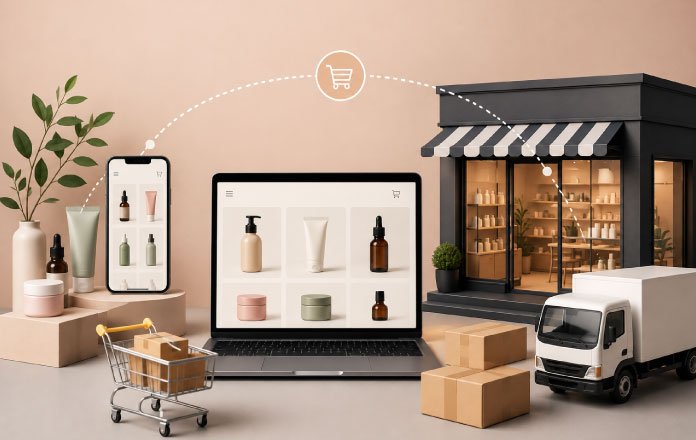
India’s direct-to-consumer (D2C) brands had a simple formula for growth for several years: launch online, spend aggressively on marketing, acquire customers and expand as quickly as possible.
That approach helped create a new generation of Indian consumer brands across beauty, fashion, food, personal care and other categories. But the market has changed. Investors and large consumer companies are no longer looking only at how fast a brand can increase sales. They also want to know whether the business can make money and keep customers.
That is changing the way D2C companies operate.
From Online Brand to Bigger Business
Yes Madam is a good example of this change.
The company started as a marketplace for at-home beauty services. Its initial focus was on problems that customers commonly faced in the sector, including trust, hygiene and consistency in service.
Over time, the company moved beyond services and started building its own beauty product business. Its brands include Sokora and Organica Da Roma.
Sokora has become an important part of this strategy. The company has focused on products that combine scientific formulations with a more enjoyable experience for Indian consumers.
This gives Yes Madam another way to stay connected with customers after a service is completed.



The company follows an online-led model for discovery and bookings while providing the actual beauty service at the customer’s home. It currently handles more than 2.5 lakh bookings every month.
Celebrity partnerships have also helped the company build visibility. Its association with Shraddha Kapoor, along with collaborations involving Ekta Kapoor and Shweta Tiwari, has helped it reach a larger audience.
The company’s next priorities include entering more cities, strengthening its partner network, improving the way it operates and moving towards profitability.
Growth Is No Longer the Only Target
For several years, customer acquisition was the main priority for many D2C companies.
Brands were willing to spend heavily on digital advertising because getting more customers was seen as the fastest route to growth. Some young businesses spent 30–40 percent of their revenue on digital marketing during their early years.
But customer acquisition became more expensive after 2021. Logistics costs also increased, while offline retail brought additional expenses.
When a D2C brand enters physical retail, distributors and retailers can take margins of around 20–35 percent. That makes the economics very different from selling directly through a company’s website.
The funding slowdown between 2022 and 2024 made the situation more serious. Startups could no longer depend on fresh funding to support aggressive expansion.
Many companies cut marketing expenses by around 25–40 percent. Growth rates also came down. Brands that had earlier grown at 80–100 percent annually were increasingly seeing growth in the 25–40 percent range.
The good part was that slower growth also gave companies an opportunity to improve their margins and control their costs.
For investors and large consumer companies, this matters. Established FMCG businesses can operate with EBITDA margins of around 18–25 percent. Many young digital brands, however, have historically worked with much smaller margins or even reported losses.
This is why D2C companies are now looking more carefully at advertising spend, supply chains and the number of products they sell.
Quick Commerce Changes the Game
Quick commerce has become another important part of the D2C story.
For categories such as snacks, personal care and health foods, quick-commerce platforms now contribute a meaningful share of sales for some established brands. In some cases, the channel contributes around 10–25 percent of urban revenue.
There is another benefit. Faster inventory movement can help brands manage stock better and reduce their dependence on expensive digital advertising.
For consumers, the attraction is simple: they can discover and receive products quickly.
For brands, it provides another route to reach customers without depending entirely on their own websites or traditional marketplaces.
D2C Brands Are Going Offline
The move into physical stores is perhaps the clearest sign that India’s D2C market is changing.
Brands that once operated almost entirely online are now opening stores in malls, high streets and other retail locations.
CBRE data cited by Retail4Growth shows that D2C brands accounted for nearly 18 percent of retail space leased between January and June 2025. Fashion and apparel made up more than 60 percent of this activity, followed by homeware and furnishing.
Lenskart, Nykaa and Bluestone are examples of brands that have successfully built physical retail networks.
For categories where customers want to see, touch or try a product before buying, stores can play an important role.
But opening a store is not as simple as taking an online brand and putting it inside a shop.
A Store Needs More Than a Good Brand
Location, lighting, store design, product arrangement and customer service all affect how a physical store performs.
D2C companies also need to understand that stores take time to deliver returns. Retail4Growth points to a three-to-five-year view for offline investments rather than expecting immediate results.
Suta is one example. The saree and apparel brand entered offline retail in 2022 and focused on creating stores that felt comfortable and welcoming.
The company now has 19 stores, with physical retail contributing 35 percent of its revenue.
BOHECO has taken a slower approach. It opened its first store in 2021 and its second in 2023 before deciding to expand further. The company currently has five outlets and plans to add another 10 over the next two years.
Location remains an important factor. Between January and June 2025, 46 percent of D2C leasing was on high streets, 40 percent in malls and the remaining share in standalone stores.
The problem is that good retail locations are expensive and difficult to secure. Brands also have to deal with mall approvals, rent and the expectations of landlords.
The New D2C Formula
The D2C market is not moving away from growth. It is simply becoming more careful about how that growth is achieved.
Brands now have to balance sales growth with profitability. They need customers who come back, not just customers who make one purchase.
They also need to decide when an offline store makes sense instead of opening outlets simply because competitors are doing so.
The focus is increasingly on:
- Growing sales without spending excessively
- Improving margins on every order
- Bringing customers back for repeat purchases
- Using quick commerce where it makes business sense
- Expanding into physical stores carefully
- Keeping product portfolios under control
- Improving supply-chain and operating costs
For Yes Madam, the opportunity is to build a larger beauty business around its existing customer base rather than depend only on individual service bookings.
For the wider D2C industry, the lesson is similar. The period of chasing growth at any cost is giving way to a more practical approach.
The brands that can keep customers, manage costs, maintain healthy margins and expand at the right pace are likely to have the strongest chance of building lasting businesses.
India’s D2C story, therefore, is far from over. The exciting part is simply changing. The first phase was about getting noticed and growing fast. The next phase will be about proving that the business can stand on its own.