




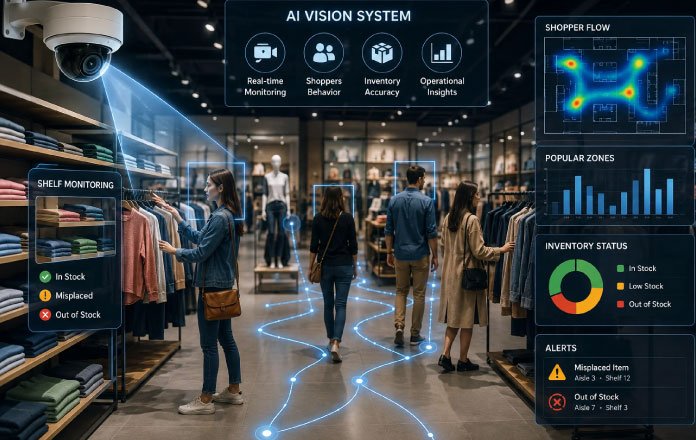
Walk into a busy retail store and a lot is happening at once. Products are picked up, moved, returned to the wrong shelf, or purchased. Shoppers take different routes through the aisles, stop at certain displays, and sometimes ignore others altogether. Keeping track of all this activity through manual checks alone is difficult.
AI-powered computer vision gives retailers another way to understand what is happening inside the store. Cameras and sensors collect visual information that can be used to track product placement and movement, as well as the way shoppers interact with merchandise. This makes it easier to spot patterns that may otherwise go unnoticed.
The technology is not limited to monitoring. Information gathered from shelves, aisles, and checkout areas can support decisions about inventory, store layout, and overall performance.
Evolving Retail Visibility Through Integrated Visual Intelligence
One practical use of computer vision is shelf monitoring. A system may detect a space, a product sitting in the wrong location, or a display that no longer matches the intended arrangement.
Traditionally, employees would find many of these problems during scheduled store checks. Visual systems provide a more immediate view. If something changes on the shelf, staff do not necessarily have to wait until the next inspection to discover it.
The information becomes more useful when connected with inventory and transaction records. Suppose an item has been removed from a shelf, but the change does not appear in the store’s records. The difference can be identified, giving the retailer a clearer picture of available stock and supporting better replenishment decisions.
There is another side to the technology: understanding how people move through a store. The routes shoppers take, the places where they pause, and the products they interact with provide clues about how the space is actually being used. Retailers may use that information when reviewing product placement, accessibility, or the layout of the store.
Recognizing products accurately is especially important in stores with large assortments. Many items look similar, and small differences in packaging or shelf position are easy to miss during a manual inspection. More precise visual recognition makes it possible to distinguish between similar products and identify placement problems.

Unusual activity may stand out as well. Unexpected product movement, irregular movement through the store, or a shelf that no longer looks as expected may require attention. Visual analysis gives store teams information they can use to investigate the situation and decide what action is needed.
Addressing System Complexity Through Adaptive Visual Processing
A retail store is a difficult environment for any vision system. Lighting changes. Reflections interfere with camera views. Products block one another, and an item may be only partly visible. A system that works well under one set of conditions may face a different scene later in the day.
Adaptive processing models are designed to deal with these changes and maintain recognition accuracy as conditions vary.
The technology must also fit into systems that retailers already use. Visual information may need to connect with inventory software, sales platforms, and existing operational processes. Structured integration frameworks allow that information to move between systems without requiring retailers to replace their entire technology setup.
Similar packaging presents its own difficulty. A store may carry several products that differ only slightly in color, size, or design. Models need continued refinement using a varied set of images if they are to distinguish between such items reliably and keep shelf monitoring accurate.
Privacy remains part of the discussion. Retailers need useful information about store activity while respecting expectations around data protection. Anonymization methods and controls over how visual information is handled make it possible to analyze store activity without identifying individual shoppers.
Stores do not stay the same for long, either. Product ranges change, shelves are rearranged, and layouts are updated. Vision systems have to keep pace with those changes. Regular monitoring and adjustment help the technology remain aligned with the store as it actually operates, rather than the store as it was originally configured.
Advancing Retail Operations Through Intelligent Visual Interpretation
Retail computer vision is gradually moving beyond the simple task of identifying an object. The focus is shifting toward context: where a product is located, what surrounds it, and what is happening nearby.
That matters because an isolated image tells only part of the story. A product on a shelf, a gap beside it, and the activity around that area may together provide more useful information than object recognition alone.
Real-time analysis adds another layer. Store teams do not have to depend entirely on reports produced after an event has already happened. They can work with information that reflects current store conditions and respond while the issue still matters.
Visual patterns may eventually help with decisions about what comes next as well. Changes in product movement and shopper behavior can provide indications of shifting demand. Retailers can use those observations when considering where stock should be positioned and how available space should be used.
The value of computer vision in retail lies in turning ordinary store activity into information that can be examined and acted upon. As the technology becomes better at interpreting context, retailers gain a more detailed view of what is happening across the store and a stronger basis for making operational decisions.