






Artificial intelligence is no longer something only large technology companies can afford. Small and medium-sized businesses are also finding practical ways to use AI for daily operations, customer service, marketing, finance and decision-making.
However, buying an AI tool and actually getting business value from it are two different things.
For an SME, AI should solve a genuine business problem. It should help the owner understand what is happening in the business, reduce unnecessary manual work and make decisions with better information.
Recent research shows how quickly interest is growing. SME spending on AI platforms has increased sharply across Asia Pacific, while many businesses are considering AI for activities such as payments. At the same time, concerns about trust, control and transparency remain.
Start With the Business Problem
One common mistake is to start by asking, “Which AI tool should we buy?”
A better question is, “Which business problem is taking too much time or creating poor decisions?”
For many SMEs, the answer could be cash-flow planning, supplier payments, invoice reconciliation, recurring expenses or inventory management.
These are areas where business owners already have data but may not have enough time to examine it properly.
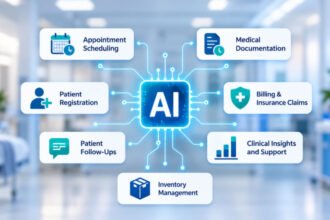

AI can help bring those pieces together and highlight information that may otherwise be missed.
The important point is to choose the problem first and the technology second.
Reduce Repetitive Work
Most SMEs operate with limited teams. Employees often spend a considerable amount of time handling routine activities such as invoices, data entry and customer queries.
AI-based automation can take care of some of this work.
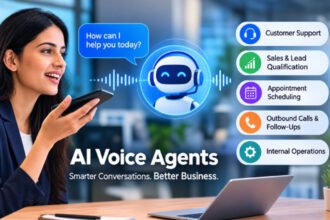
For example, businesses can use chatbots and virtual assistants to answer common customer questions. Automated systems can also assist with invoicing and other repetitive administrative tasks. This gives employees more time to focus on work that requires experience, judgment and direct customer interaction.
The purpose of automation should not be to remove people from every process. It should remove unnecessary manual effort from the process.
Put Business Data to Better Use
Data is available in almost every business. The problem is that it is often sitting in different places.
Payment information may be in one system. Accounting records may be somewhere else. Inventory, sales and customer information may sit in separate platforms.
When these pieces are disconnected, getting a clear picture of the business becomes difficult.
AI can help analyse different types of information and identify patterns. This can support decisions around customers, sales, inventory and marketing.
For SMEs, however, more data does not automatically mean better results. The data needs to be accurate, relevant and available at the right time.
Improve Customer Service
Customer expectations have changed considerably. People want quick answers, simple communication and relevant recommendations.
AI can support this area through chatbots and virtual assistants that handle customer questions at any time.
It can also examine customer information to understand buying behaviour and preferences. Businesses can then use these insights to create more relevant recommendations and marketing campaigns.
For a small business, even a modest improvement in customer communication can make a difference because retaining an existing customer is often easier than constantly finding new ones.
Make Marketing More Relevant
Marketing is another area where SMEs can make practical use of AI.
AI tools can help businesses divide customers into different groups, study buying patterns and create more targeted campaigns. Email marketing and online advertising can then be adjusted according to the interests or behaviour of different customer groups.
This is particularly useful for smaller companies that cannot afford large marketing teams.
But businesses should still review the output before publishing or sending it. AI can assist with analysis and content creation, but understanding the customer and the brand still requires human involvement.
AI Can Support Better Lending Decisions
The role of AI becomes particularly interesting in SME lending.
In the MENA region, SMEs account for around 80% to 90% of businesses in most countries and contribute between 10% and 40% of employment. At the same time, they face financing needs of more than $100 billion, according to the EY report referenced by Provenir.
Traditional lending processes can take weeks or even months. For a small business waiting for funds, that delay can affect expansion plans, working capital and even day-to-day survival.
Digital lenders, fintech companies and challenger banks are using data, predictive analytics and AI to assess applications more efficiently.
Using real-time, historical and alternative data can give lenders a broader view of an SME’s creditworthiness. It can also help them make lending decisions faster while keeping risk under control.
Do Not Give AI Complete Control
This is where SMEs need to be careful.
AI can recommend an action, but businesses should decide how much authority the system actually has.
Research among 2,700 SMEs across Asia Pacific found that concerns vary between markets. In Australia, loss of human control was the biggest concern among businesses that were not fully convinced about AI-driven payments. In China, unclear AI decision-making was the main concern, while fraudulent payment risk was a leading concern in Thailand.
These concerns are understandable.
Before allowing AI to influence payments or supplier decisions, an SME should establish clear rules.
For example:
- Which payments require approval?
- What spending limit needs human review?
- What happens when invoice information does not match?
- Who can override an AI recommendation?
- Can an automated action be reversed?
- How are important decisions recorded?
These basic controls become even more important as AI systems move from giving suggestions to taking actions.
Keep Cybersecurity in the Picture
More digital systems also mean more responsibility for protecting business information.
AI-based security systems can monitor network activity, identify unusual behaviour and respond to potential threats. This can be useful for SMEs that may not have a large internal cybersecurity team.
But businesses should also remember that AI systems need controls of their own.
Data protection, access permissions, monitoring and human review should be considered before an AI system is connected to sensitive business information.
Train Employees Along With the Technology
Technology will only work properly when employees know how to use it.
Deloitte research highlights the skills gap as one of the major barriers preventing SMEs from making greater use of AI. The answer is not necessarily to hire a large team of AI specialists.
For most SMEs, practical training is more useful.
Employees should understand what an AI tool can do, where it can make mistakes and when a human needs to check its output.
Training can be based on actual business activities rather than complicated technical theory.
Start Small and Expand Gradually
An SME does not need to introduce AI across the entire organisation at once.
A better approach is to start with one practical use case.
For example, a company could begin with customer support, invoice processing or marketing analysis. Once the business understands the results and the risks, it can consider expanding AI into other areas.
Cloud services and subscription-based software have also made AI more accessible to smaller companies, reducing the need for major upfront technology investments. Deloitte points to areas such as cash-flow forecasting, cross-border payments, dynamic pricing and foreign-exchange risk management as possible applications.
Measure the Business Result
The success of AI should not be measured only by how many tasks it completes.
Business owners should look at practical results.
Is cash-flow visibility improving? Are employees spending less time on reconciliation? Are customer queries being answered faster? Are lending decisions becoming more accurate? Are payment errors decreasing?
These are better questions than simply asking whether the company is “using AI.”
A chatbot that writes an email may save a few minutes. A system that brings together cash flow, payments, receivables and inventory can give an owner a much clearer view of the business.
That difference matters.
AI Should Help SMEs Run Better
AI gives SMEs access to capabilities that were previously difficult or expensive to build internally.
But technology alone will not solve business problems.
SMEs need to identify the right use cases, maintain good data, train their employees and establish clear controls before allowing AI to influence important decisions.
The best starting point is simple: find one business problem, use AI to address it, measure the result and learn from the experience.
For small businesses, AI does not need to be complicated. When used sensibly, it can reduce routine work, improve customer interactions, support financial decisions and give business owners better information when they need to make important choices.
The real question for an SME is therefore not how much AI it can adopt.
It is whether the technology is helping the business make better decisions with greater confidence and control.