





The luxury jewelry business has traditionally belonged to heritage brands, established houses, and ateliers with decades of history behind them. But that equation is changing.
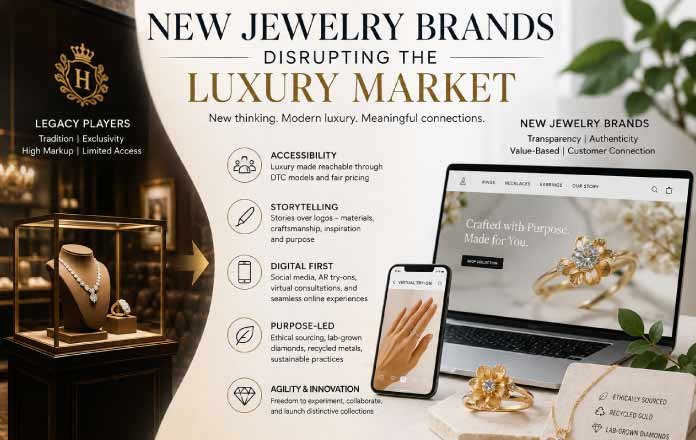
A new generation of jewelry brands is entering the market with a different approach. They are not simply competing by producing attractive designs. They are changing how customers understand luxury, what they expect from a jewelry brand, and how they want to buy.
These newer companies are building their businesses around changing customer preferences, digital platforms, craftsmanship, transparency, and a stronger connection with buyers.
From Exclusivity to Accessibility
For years, traditional luxury jewelry brands built their reputation around high prices, exclusivity and premium stores in affluent locations. That model helped create a strong perception of prestige.
But younger consumers, particularly Millennials and Gen Z, are looking for something more.
They are increasingly interested in transparency, authenticity, craftsmanship and the story behind what they purchase. Simply carrying a well-known name is no longer enough to create the same level of connection.
New jewelry entrepreneurs are responding to this change. Some are offering handcrafted jewelry without the traditional luxury markup, while others are following a direct-to-consumer (DTC) model that removes intermediaries from the buying process.
This gives these brands two important advantages. They can make luxury more accessible while also developing a closer relationship with customers.



For today’s buyer, prestige is only one part of the decision. Personal meaning and purpose are becoming equally important.
Storytelling Over Logos
One of the biggest strengths of emerging jewelry brands is their ability to tell a compelling story.
Established luxury houses already have years of brand recognition behind them. New brands do not have that advantage, so they need to give customers another reason to pay attention.
They talk about the materials they use, where those materials come from, the people involved in making the jewelry, the inspiration behind their designs, and the values that guide the business.
This information matters to modern consumers. They want to understand what they are buying and the story behind it.
Niche jewelry houses, especially those working with nature-inspired designs, are a good example. Someone searching for elegant flower rings at Flawless, for instance, may not simply be looking for another ring. The design can represent an appreciation for organic beauty and carry a deeper emotional meaning.
That story becomes part of the product’s overall value.
Digital Natives in a Digital Market
There is also a clear difference in how established luxury companies and newer jewelry brands approach digital platforms.
Many traditional luxury brands are still working through their digital transformation. Newer companies, on the other hand, have been built with digital channels at the centre of their business.
They understand how social media works, how influencer marketing can help reach potential customers, and how SEO can bring products in front of people actively searching for them.
Instagram and TikTok are no longer places to advertise. For digital-first jewelry brands, they can serve several purposes at once. They act as storefronts, customer service channels and spaces where brands can explain their designs and connect with their audience.
Technology is also removing some of the barriers traditionally associated with luxury shopping.
Augmented reality (AR) try-ons, virtual consultations, and interactive online catalogues allow customers to explore jewelry without necessarily visiting a physical luxury boutique.
The women’s engagement ring market is a strong example of this shift. Buyers increasingly expect online shopping experiences that offer convenience while still providing the personal attention and sense of confidence they would normally expect from an in-store experience.
Purpose-Led Positioning
Purpose is another area where newer jewelry brands are making their presence felt.
Social responsibility, sustainability and ethical business practices are becoming important considerations for consumers. Emerging brands are responding through ethical sourcing, lab-made diamonds, recycled precious metals, and carbon-neutral production.
For these businesses, such practices are positioned as part of the company’s foundation rather than being used only as promotional messages.
This approach can appeal strongly to conscious consumers who want their purchases to reflect their personal values. It also gives newer brands an opportunity to establish a clear identity that may differ from traditional luxury institutions.
Another advantage is flexibility.
Because these companies do not have the same long history and established structures as legacy players, they can experiment more freely. They can collaborate with businesses from other industries, change direction when needed, and introduce limited-release drops or collections focused on craftsmanship.
These strategies can help their products feel more current, distinctive, and collectible.
Disruption Is Here to Stay
This does not mean heritage jewelry brands are going away. They continue to have strong recognition and established customer bases. However, they are facing serious competition from brands that are approaching luxury differently.
The new players are proving that luxury does not always have to be built around high barriers, limited accessibility, or traditional ways of doing business.
Luxury can also be personal, purposeful, digitally connected, and more transparent.
As consumers continue to look for both beauty and meaning in the products they purchase, jewelry brands that combine strong craftsmanship with emotional storytelling and modern customer experiences will be better positioned for the next phase of the luxury market.
The disruption, therefore, is not simply about new jewelry companies entering an established industry. It is about changing expectations around what makes a piece of jewelry valuable in the first place.